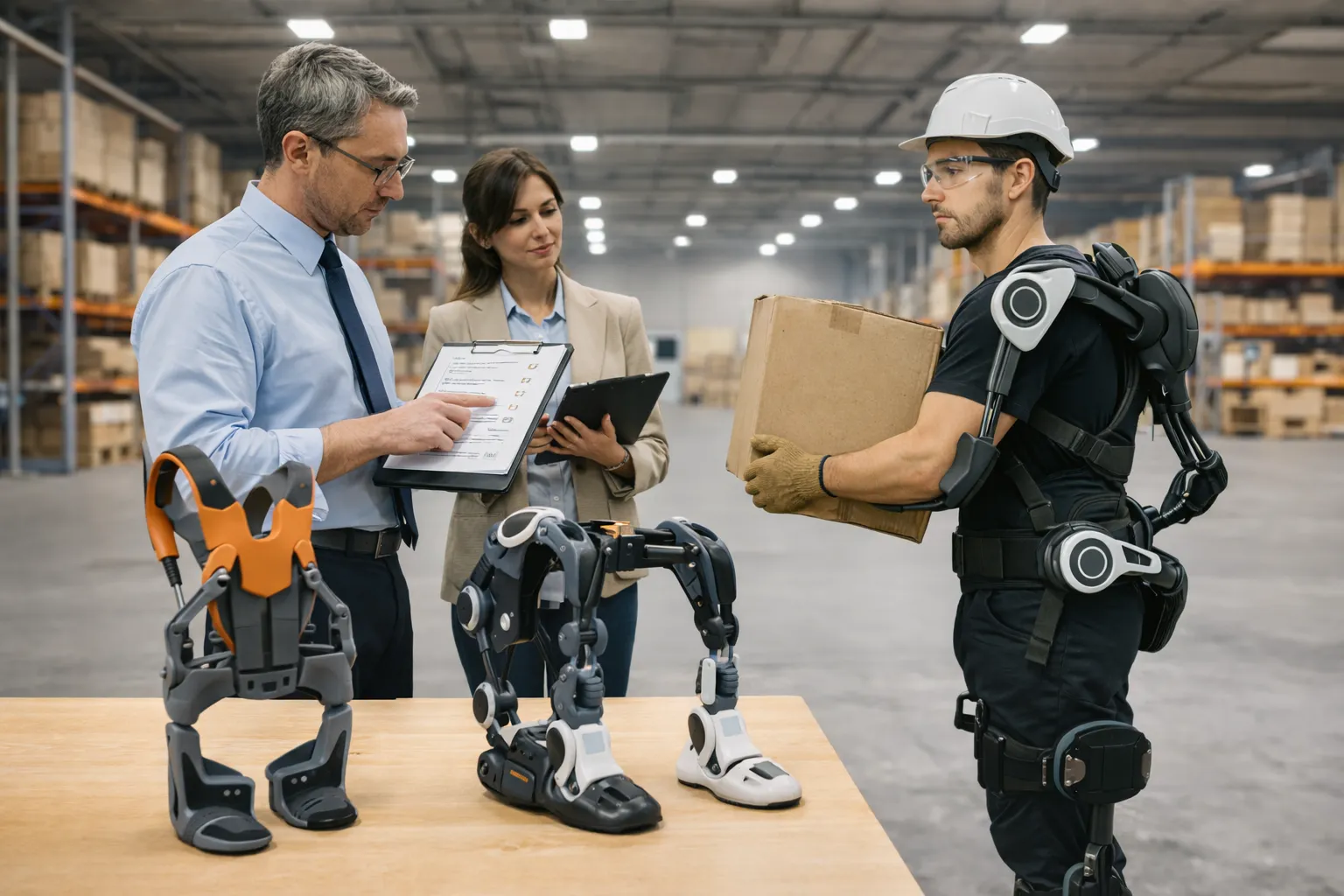
Practical Guide: Financing Your Exoskeleton
Overview of aids, grants, and procedures to obtain funding.
Lire →
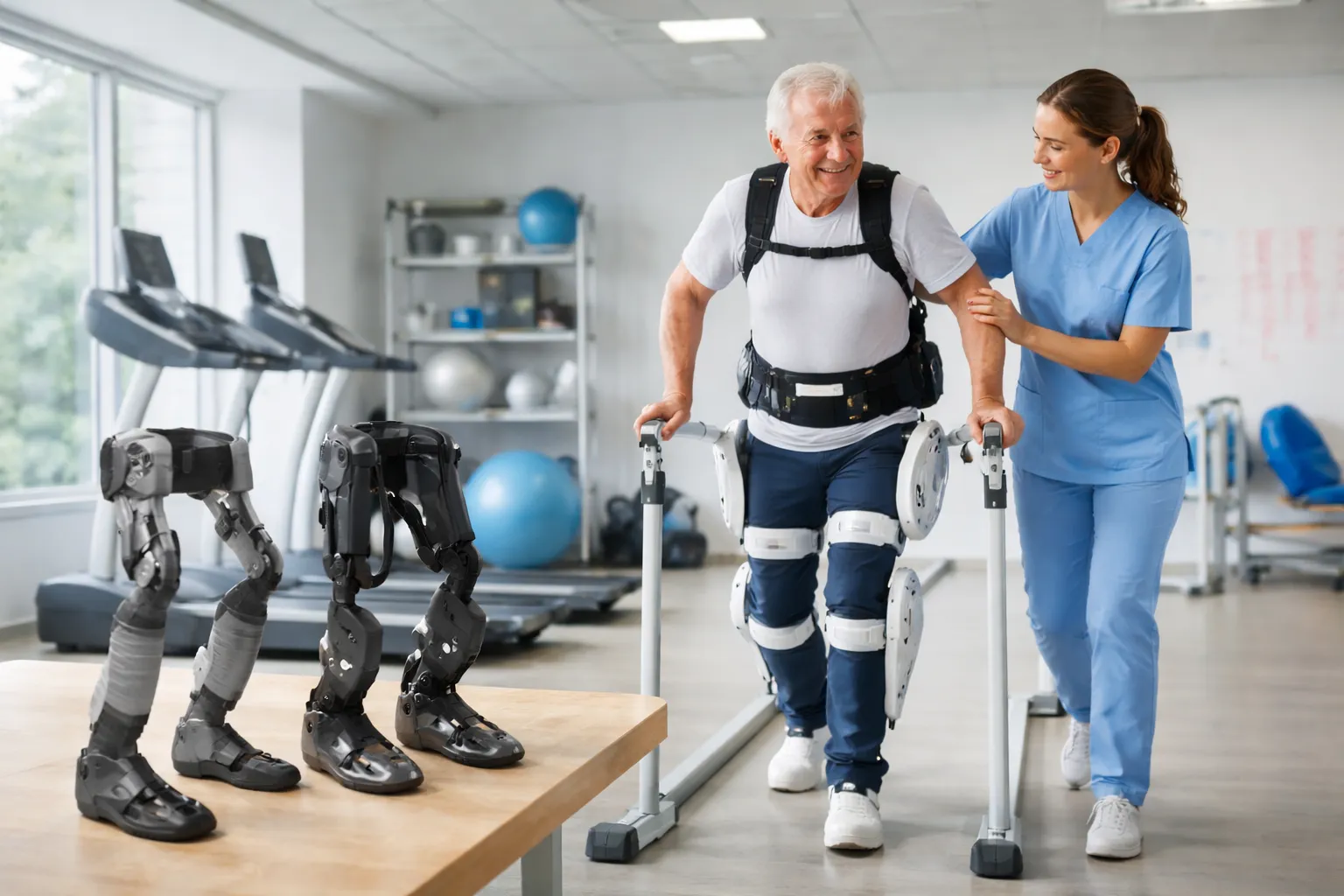
Overview of available devices and usage indications.
Mobility assistance technologies are evolving rapidly. Exoskeletons and walking aid devices today support various user profiles, whether they are individuals in rehabilitation, seniors, or people wishing to extend their autonomy.
Mobility exoskeletons are designed to support or assist leg movements.
Depending on the models, they can:
assist walking
reduce muscle fatigue
improve balance
facilitate movement.
These devices can be used in various contexts:
functional rehabilitation
maintaining autonomy
assistance for daily mobility.
Some systems operate without motorization and simply use mechanics and ergonomics to redistribute efforts.
These solutions offer several advantages:
lightweight
ease of use
total autonomy (no battery).
Motorized exoskeletons provide a higher level of assistance through motors and sensors that accompany movement.
They are primarily used in:
medical rehabilitation
specialized centers
certain industrial applications.
The choice of a device depends on several factors:
level of assistance required
usage environment
desired autonomy
available budget.
A needs analysis usually helps determine the most suitable solution.