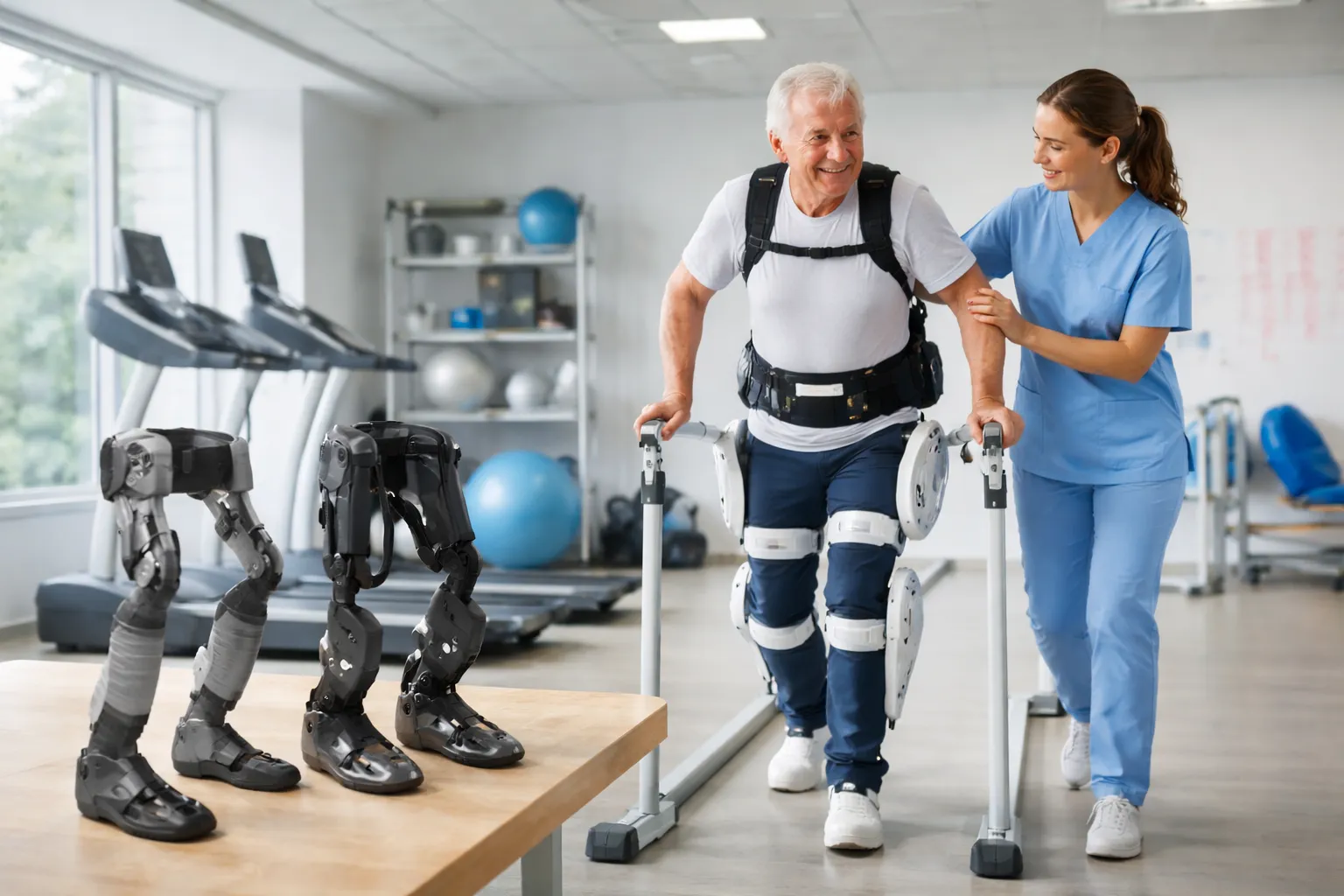
Practical Guide: Financing Your Exoskeleton
Overview of aids, grants, and procedures to obtain funding.
Lire →
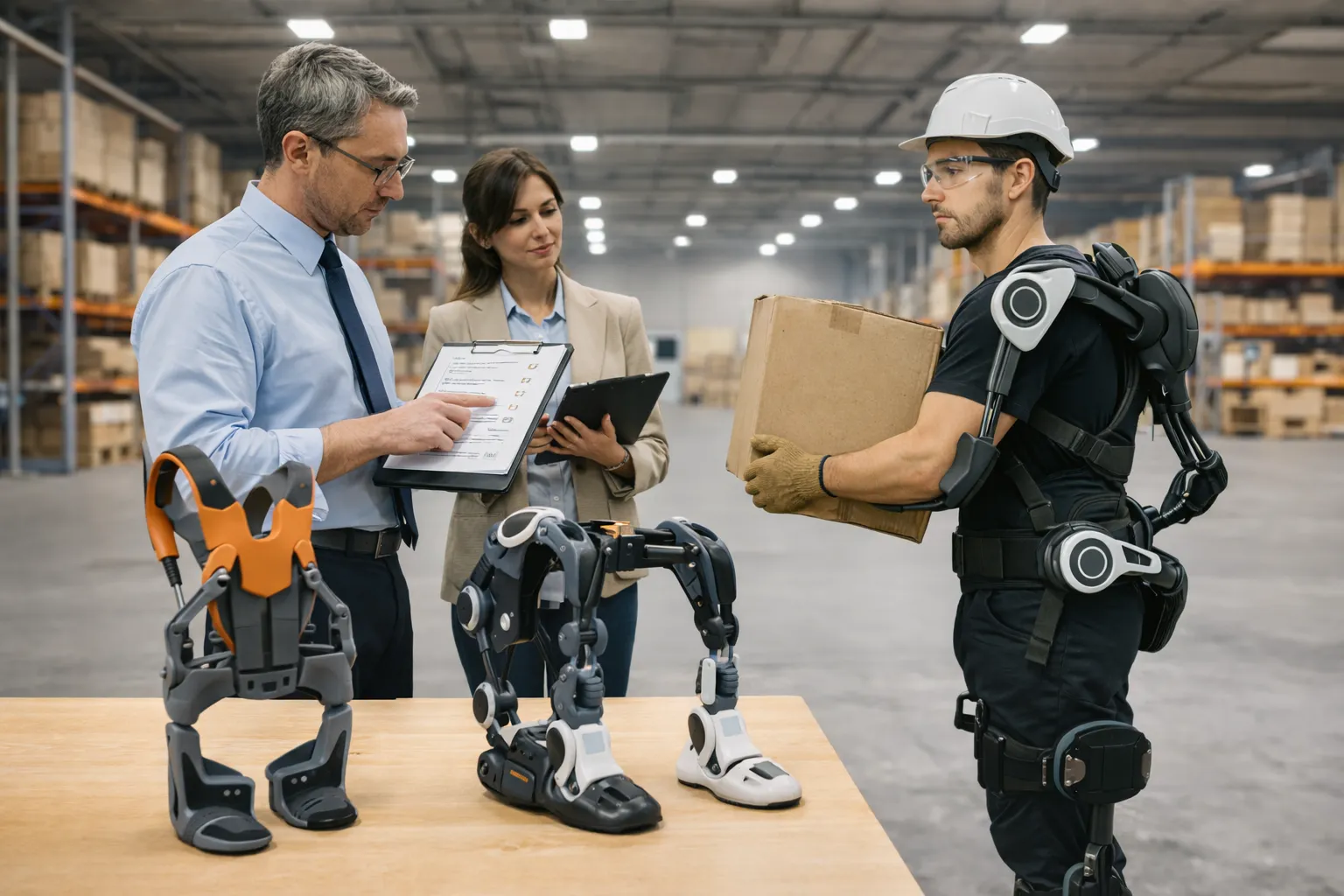
Essential criteria, ROI, prevention of MSDs, safety, and training.
The use of exoskeletons in companies is rapidly growing. These devices help reduce physical strain, improve workplace ergonomics, and limit musculoskeletal disorders (MSDs).
However, choosing an exoskeleton is not just about purchasing a technological device. To be truly effective, it must be adapted to the tasks performed, the constraints of the workstation, and the users.
Here are the essential criteria to analyze before equipping yourself.
The first step is to analyze work situations that generate significant physical constraints. Exoskeletons are particularly useful in the following contexts:
handling loads
prolonged work with arms raised
bent or constrained positions
repetitive movements
prolonged standing.
This analysis can be conducted internally, but it is often recommended to rely on a ergonomist or a risk prevention specialist.
There are several categories of exoskeletons, each designed to meet specific needs.
They support the lumbar region and help reduce effort when lifting or carrying loads.
They are particularly used in:
logistics
warehouses
industry
handling.
These devices assist movements when the arms are held up.
They are common in:
the automotive industry
assembly work
industrial maintenance.
They relieve the lower limbs and help reduce fatigue during long periods of standing or frequent movement.
Exoskeletons can operate based on two principles.
They use mechanical systems (springs, levers, load redistribution) to assist movements.
Advantages:
lightweight
easy to use
no battery
generally lower cost.
They are currently the most used in industrial settings.
They integrate motors and sensors that assist the user's movement.
Advantages:
greater assistance
adaptability to movements.
They are more common in medical or rehabilitation sectors.
An exoskeleton will only be effective if it is actually used by operators.
Several criteria must be evaluated:
ease of donning
weight of the equipment
freedom of movement
compatibility with protective equipment
comfort during a workday.
It is often recommended to conduct real-world tests before deploying equipment on a large scale.
A project to integrate exoskeletons should be part of a comprehensive risk prevention approach.
The objectives may include:
reduction of physical fatigue
decrease in musculoskeletal disorders
improvement of working conditions
retention of certain employees
optimization of certain tasks.
The gains can also be organizational, particularly by reducing work stoppages related to MSDs.
In France, several mechanisms can contribute to the financing of an exoskeleton.
Some public aids aim to support investments that help prevent ergonomic risks.
Companies can particularly benefit from prevention programs offered by social security organizations or regional funds.
Depending on the mechanisms, these aids can finance a significant portion of the investment.
The introduction of an exoskeleton in an organization should be accompanied by:
a testing phase
training for users
monitoring of feedback from the field
a gradual adaptation of practices.
A gradual deployment generally leads to better results and encourages team buy-in.
Exoskeletons are part of innovations aimed at improving working conditions and reducing physical strain. Their adoption is progressing in many sectors such as industry, logistics, construction, and health.
Well-chosen and properly integrated into the work organization, an exoskeleton can become a true tool for prevention and improvement of collective performance.