
Everything You Need to Know About Exoskeletons in 2026: Complete Guide
The reference guide to understanding professional exoskeletons: technologies, uses, selection criteria, regulations, fun
Lire →
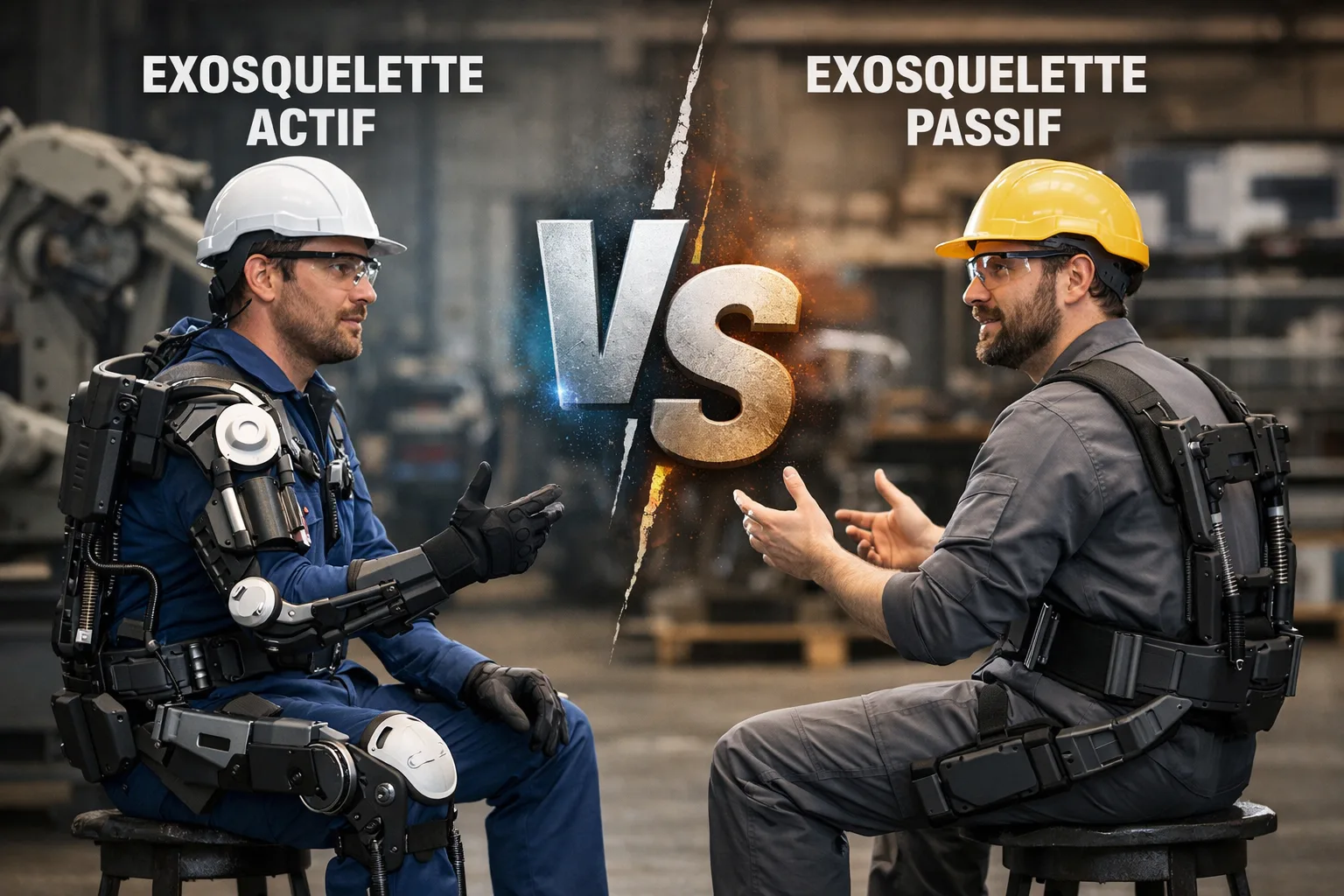
Understand the differences between passive and active exoskeletons, their respective advantages, and know which one suits your professional activity.
The choice between a passive and an active exoskeleton primarily depends on your needs, profession, and budget. Here is a clear comparison to help you decide.
A passive exoskeleton uses mechanical mechanisms — springs, elastics, carbon or textile structures — to redistribute efforts without external energy input.
Ideal for: daily prevention, moderate and repetitive effort positions, environments where lightness is essential.
An active exoskeleton incorporates motors, sensors, and a battery to provide assistance proportional to the detected effort.
Ideal for: heavy loads, high-strain positions, rehabilitation, contexts where a passive solution is insufficient.
| Criterion | Passive | Active |
|---|---|---|
| Average Weight | ~1 kg | ~5-8 kg |
| Average Price | ~€1,500 | ~€15,000 |
| Autonomy | Unlimited | 4-8h |
| Maintenance | Minimal | Regular |
| Donning Time | < 30s | 1-3 min |
| Adoption Rate | High | Variable |
| Assistance | Moderate | Strong |
For 80% of professional positions, a well-chosen passive exoskeleton will be sufficient and will be better adopted by operators. The passive should be your first reflex. Only switch to active if the job analysis shows that the required effort exceeds the assistance capabilities of a passive.
The reference guide to understanding professional exoskeletons: technologies, uses, selection criteria, regulations, fun
Lire →
How exoskeletons reduce MSDs in warehouses and logistics. Picking, order preparation, loading: solutions tailored to eac
Lire →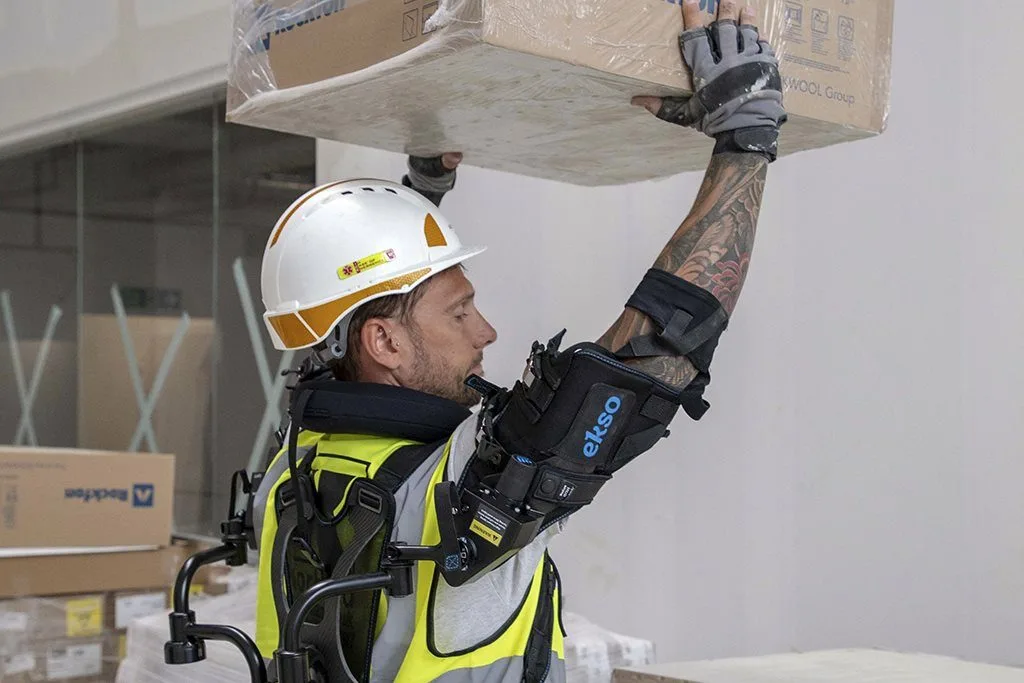
Practical guide to choosing an exoskeleton suitable for construction jobs: mason, plumber, electrician, painter, roofer.
Lire →